Deprecated: Return type of Ai1wm_Recursive_Directory_Iterator::hasChildren($allow_links = true) should either be compatible with RecursiveDirectoryIterator::hasChildren(bool $allowLinks = false): bool, or the #[\ReturnTypeWillChange] attribute should be used to temporarily suppress the notice in /home/stagingaliansoft/public_html/wp-content/plugins/all-in-one-wp-migration-unlimited-main/lib/vendor/servmask/iterator/class-ai1wm-recursive-directory-iterator.php on line 57

Deprecated: Return type of Ai1wm_Recursive_Directory_Iterator::rewind() should either be compatible with FilesystemIterator::rewind(): void, or the #[\ReturnTypeWillChange] attribute should be used to temporarily suppress the notice in /home/stagingaliansoft/public_html/wp-content/plugins/all-in-one-wp-migration-unlimited-main/lib/vendor/servmask/iterator/class-ai1wm-recursive-directory-iterator.php on line 35

Deprecated: Return type of Ai1wm_Recursive_Directory_Iterator::next() should either be compatible with DirectoryIterator::next(): void, or the #[\ReturnTypeWillChange] attribute should be used to temporarily suppress the notice in /home/stagingaliansoft/public_html/wp-content/plugins/all-in-one-wp-migration-unlimited-main/lib/vendor/servmask/iterator/class-ai1wm-recursive-directory-iterator.php on line 42

Deprecated: Return type of Ai1wm_Recursive_Extension_Filter::getChildren() should either be compatible with RecursiveFilterIterator::getChildren(): ?RecursiveFilterIterator, or the #[\ReturnTypeWillChange] attribute should be used to temporarily suppress the notice in /home/stagingaliansoft/public_html/wp-content/plugins/all-in-one-wp-migration-unlimited-main/lib/vendor/servmask/filter/class-ai1wm-recursive-extension-filter.php on line 47

Deprecated: Return type of Ai1wm_Recursive_Extension_Filter::accept() should either be compatible with FilterIterator::accept(): bool, or the #[\ReturnTypeWillChange] attribute should be used to temporarily suppress the notice in /home/stagingaliansoft/public_html/wp-content/plugins/all-in-one-wp-migration-unlimited-main/lib/vendor/servmask/filter/class-ai1wm-recursive-extension-filter.php on line 37

Deprecated: Return type of Ai1wm_Recursive_Exclude_Filter::getChildren() should either be compatible with RecursiveFilterIterator::getChildren(): ?RecursiveFilterIterator, or the #[\ReturnTypeWillChange] attribute should be used to temporarily suppress the notice in /home/stagingaliansoft/public_html/wp-content/plugins/all-in-one-wp-migration-unlimited-main/lib/vendor/servmask/filter/class-ai1wm-recursive-exclude-filter.php on line 41

Deprecated: Return type of Ai1wm_Recursive_Exclude_Filter::accept() should either be compatible with FilterIterator::accept(): bool, or the #[\ReturnTypeWillChange] attribute should be used to temporarily suppress the notice in /home/stagingaliansoft/public_html/wp-content/plugins/all-in-one-wp-migration-unlimited-main/lib/vendor/servmask/filter/class-ai1wm-recursive-exclude-filter.php on line 37

Deprecated: Return type of Ai1wm_Recursive_Newline_Filter::accept() should either be compatible with FilterIterator::accept(): bool, or the #[\ReturnTypeWillChange] attribute should be used to temporarily suppress the notice in /home/stagingaliansoft/public_html/wp-content/plugins/all-in-one-wp-migration-unlimited-main/lib/vendor/servmask/filter/class-ai1wm-recursive-newline-filter.php on line 28
Web Development Archives - Alian Software https://staging.aliansoftware.net/tag/web-development/ Best Web & Mobile App Development Company Fri, 28 Nov 2025 04:24:12 +0000 en-US hourly 1 https://wordpress.org/?v=6.8.3 https://staging.aliansoftware.net/wp-content/uploads/2022/08/favicon.png Web Development Archives - Alian Software https://staging.aliansoftware.net/tag/web-development/ 32 32 The Evolution of ERP: Cloud-Based vs. On-Premise ERP Solutions https://staging.aliansoftware.net/ai-ml/the-evolution-of-erp-cloud-based-vs-on-premise-erp-solutions/ Mon, 07 Apr 2025 05:09:17 +0000 https://aliansoftware.com/?p=49215 In today’s rapidly evolving business landscape, Enterprise Resource Planning (ERP) systems have become indispensable tools for managing operations efficiently. Over the years, ERP solutions have undergone a significant transformation, shifting from traditional on-premise setups to modern cloud-based platforms. This blog explores the fundamental differences between these two deployment models, the advantages of cloud ERP, security concerns and mitigation strategies, and the role of AI and automation in enhancing ERP functionality. As businesses strive for scalability, agility, and cost efficiency, understanding these distinctions is crucial for making informed decisions.

The post The Evolution of ERP: Cloud-Based vs. On-Premise ERP Solutions appeared first on Alian Software.

]]>

Differences Between Cloud-Based and Traditional ERP

enterprise performance management software

The primary distinction between cloud-based and on-premise ERP systems lies in their deployment and accessibility:

  • On-Premise ERP: Installed locally on a company’s← servers, on-premise ERP requires substantial upfront investment in hardware, software, and IT infrastructure. Companies must also maintain dedicated IT teams to manage system updates, security patches, and ongoing maintenance.
  • Cloud-Based ERP: Hosted on remote servers and accessed via the internet, cloud ERP eliminates the need for costly infrastructure investments. Providers manage system updates, maintenance, and security, ensuring businesses always have access to the latest features with minimal downtime.

Beyond deployment, these two models also differ in terms of customization, security, and cost structure. On-premise ERP often allows for extensive customization tailored to specific business needs, whereas cloud ERP solutions offer flexibility and scalability while maintaining standardized best practices.

Benefits of Cloud ERP

enterprise performance management software

1. Scalability and Flexibility
One of the most significant advantages of cloud ERP is its scalability. Businesses can easily adjust their resource allocation as their needs evolve, whether expanding into new markets or adapting to seasonal demand fluctuations. This flexibility is particularly beneficial for small to medium-sized enterprises (SMEs) looking for cost-effective growth solutions.

2. Cost-Effectiveness
Cloud ERP typically follows a subscription-based model (Software-as-a-Service or SaaS), reducing the hefty upfront costs associated with on-premise systems. This allows companies to shift from capital expenditures (CapEx) to operational expenditures (OpEx), making financial planning more predictable. Additionally, businesses save on IT maintenance, as cloud providers handle upgrades, security patches, and troubleshooting

3. Remote Accessibility and Collaboration
The rise of remote and hybrid work models has increased the need for seamless access to business systems. Cloud ERP enables employees to access critical data from anywhere with an internet connection, fostering collaboration across departments and geographies. Real-time data sharing enhances decision-making, streamlines workflows, and improves overall productivity.

4. Popular Cloud ERP Solutions
Several cloud ERP solutions are available in the market, each catering to different business needs:

  • AlianHub – A powerful SaaS-based ERP designed for businesses looking for AI-powered project management, resource allocation, and automation features. Businesses that require an intuitive and scalable solution often explore platforms like AlianHub for their ERP needs.
    [ https://codecanyon.net/item/alianhub-project-management-system/51373823 ]
  • ClickUp – A versatile platform offering project management and ERP-like functionalities for task tracking, workflow automation, and team collaboration.
    [ https://clickup.com/ ]
  • Jira – Widely used in agile development, Jira offers ERP capabilities through integrations and customization, making it a popular choice for software development firms.
    [ https://www.atlassian.com/ ]

Security Concerns and How to Mitigate Them

enterprise performance management software

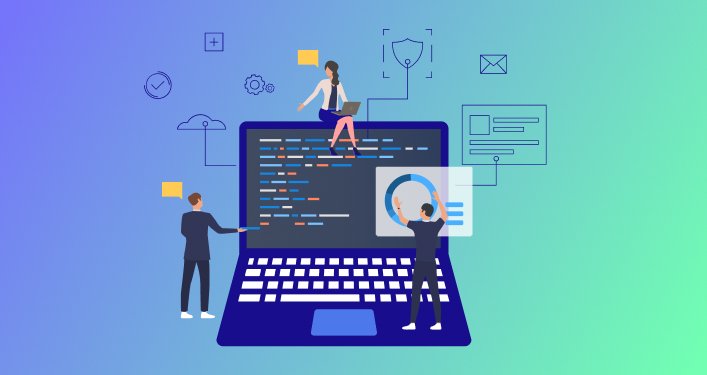
Despite its numerous benefits, cloud ERP raises security concerns, primarily related to data breaches, unauthorized access, and compliance with industry regulations. However, leading cloud ERP providers implement stringent security measures to address these risks:

1. Robust Data Protection
Cloud ERP solutions leverage advanced encryption protocols to safeguard data during transmission and storage. Multi-factor authentication (MFA) adds an extra layer of security, ensuring only authorized personnel can access sensitive information.

2. Compliance and Regulatory Standards
Top cloud ERP vendors adhere to industry regulations such as GDPR, HIPAA, and SOC 2 to protect business and customer data. Companies should verify their provider’s compliance certifications to ensure alignment with security best practices.
3. Disaster Recovery and Backup Solutions
Cloud ERP providers offer automated backups and disaster recovery mechanisms, ensuring business continuity in case of data loss or cyber threats. Organizations should review their provider’s recovery time objectives (RTO) and recovery point objectives (RPO) to ensure minimal downtime in the event of a security incident.

4. Employee Training and Internal Security Policies
Human error remains one of the leading causes of data breaches. Businesses should invest in cybersecurity training programs to educate employees on recognizing phishing attempts, managing passwords securely, and adhering to best practices for data protection.

How AI & Automation Are Enhancing ERP Functionality

enterprise performance management software

The integration of Artificial Intelligence (AI) and automation within ERP systems is revolutionizing business operations. AI-powered ERP solutions offer advanced capabilities that streamline processes, improve decision-making, and enhance overall efficiency.

1. Predictive Analytics for Smarter Decision-Making
AI-driven ERP systems analyze historical data to identify trends and predict future outcomes. This empowers businesses with actionable insights for demand forecasting, inventory optimization, and strategic planning.

2. Intelligent Process Automation (IPA)
Automation within ERP reduces manual tasks such as data entry, invoice processing, and inventory management. This not only minimizes human error but also allows employees to focus on higher-value tasks, improving overall productivity.

3. AI-Enhanced Customer Relationship Management (CRM)
AI-powered CRM within ERP systems personalizes customer interactions by analyzing behavioral data, preferences, and past interactions. This enables businesses to enhance customer engagement and drive sales growth through targeted marketing strategies.

4. Smart Supply Chain Management
AI optimizes supply chain operations by predicting demand fluctuations, detecting inefficiencies, and recommending cost-saving opportunities. Machine learning algorithms help businesses make data-driven decisions to enhance procurement, logistics, and inventory control.

Conclusion

The evolution of ERP from traditional on-premise systems to cloud-based solutions marks a paradigm shift in how organizations manage their resources. Cloud ERP offers compelling advantages, including scalability, cost savings, and remote accessibility, making it the preferred choice for businesses seeking agility and efficiency. However, security concerns must be proactively addressed through robust data protection measures, compliance adherence, and employee training.

Furthermore, AI and automation are reshaping ERP functionality, enabling businesses to optimize processes, enhance decision-making, and drive innovation. As organizations continue to adapt to changing market demands, understanding these ERP dynamics will be essential for leveraging technology effectively and maintaining a competitive edge in the digital era.

The post The Evolution of ERP: Cloud-Based vs. On-Premise ERP Solutions appeared first on Alian Software.

]]>
ERP for SMEs: Is It Worth the Investment? https://staging.aliansoftware.net/ai-ml/erp-for-smes-is-it-worth-the-investment/ Mon, 07 Apr 2025 05:07:08 +0000 https://aliansoftware.com/?p=49230 In today's fast-paced business environment, small and medium-sized enterprises (SMEs) are increasingly considering Enterprise Resource Planning (ERP) systems to streamline operations and enhance efficiency. However, there are common misconceptions surrounding ERP solutions, particularly the belief that they are only suitable for large enterprises. This blog will explore these myths, conduct a cost-benefit analysis of ERP implementation for SMEs, showcase case studies of successful ERP adoption, and provide best practices for seamless implementation.

The post ERP for SMEs: Is It Worth the Investment? appeared first on Alian Software.

]]>

Common Myths about ERP Being “Only for Large Enterprises”

enterprise performance management software
One of the most pervasive myths about ERP systems is that they are exclusively designed for large corporations. This misconception stems from the historical context in which ERP systems were developed, primarily catering to the needs of large organizations with complex operations. However, the landscape has changed significantly.

Modern ERP solutions are now tailored to meet the needs of SMEs, offering scalable options that can grow alongside the business. These systems can provide SMEs with the same level of operational efficiency, data integration, and real-time insights that larger enterprises enjoy. By debunking this myth, SMEs can recognize that ERP is not just a luxury for the big players but a valuable tool that can drive growth and competitiveness.

Additionally, many SMEs hesitate to adopt ERP due to fears of high implementation costs and disruption to existing workflows. However, with the rise of modular ERP systems, businesses can start with essential features and expand as needed. These systems enhance efficiency, automate repetitive tasks, and improve collaboration by centralizing data, enabling SMEs to compete more effectively with larger enterprises.

By debunking this myth, SMEs can recognize that ERP is not just a luxury for the big players but a critical tool for optimizing operations, improving decision-making, and driving sustainable growth in an increasingly competitive market.

Cost-Benefit Analysis of Implementing ERP in Small and Mid-Sized Businesses

enterprise performance management software

When considering the implementation of an ERP system, SMEs must conduct a thorough cost-benefit analysis. While the initial investment may seem daunting, the long-term benefits often outweigh the costs.

Costs:

  • Software Licensing and Implementation Fees: Depending on the ERP vendor, these costs can vary significantly.
  • Training and Change Management: Employees will need training to adapt to the new system, which can incur additional costs.
  • Maintenance and Support: Ongoing support and system maintenance are essential for optimal performance.

Benefits:

  • Increased Efficiency: ERP systems automate repetitive tasks, reducing manual errors and freeing up employee time for more strategic activities.
  • Improved Data Accuracy: With a centralized database, SMEs can ensure that all departments have access to accurate and up-to-date information.
  • Enhanced Decision-Making: Real-time analytics and reporting capabilities empower SMEs to make informed decisions quickly.
  • Scalability: As the business grows, ERP systems can be scaled to accommodate increased operations without the need for a complete overhaul.

For SMEs looking to implement an ERP system, here are a few popular options providing robust solutions:

AlianHub – A modern ERP tailored for product and project management with AI-driven insights.
[ https://codecanyon.net/item/alianhub-project-management-system/51373823 ]

Jira – Widely used in agile development, Jira offers ERP capabilities through integrations and customization, making it a popular choice for software development firms.
[ https://www.atlassian.com/ ]

Odoo – A flexible open-source ERP with modules for CRM, inventory, and finance.
[ https://www.odoo.com/ ]

Ultimately, the cost-benefit analysis will vary based on the specific needs and goals of each SME, but many find that the investment pays off in the long run.

Case Studies of SMEs Leveraging ERP for Growth and Efficiency

Several SMEs have successfully implemented ERP systems, leading to significant improvements in their operations. Here are a couple of notable examples:

Case Study 1: A Software SME

Alian Software, a mid-sized software firm, faced challenges with fragmented tools, operational inefficiencies, and project delays. The absence of a centralized system led to miscommunications, resource mismanagement, and missed deadlines.
Implementing AlianHub ERP transformed their operations by providing:

  • Unified Project Management: Centralized dashboards offered comprehensive project overviews, enhancing planning and execution.

  • Enhanced Team Collaboration: Real-time chat and channels improved communication, reducing misunderstandings.

  • Automated Workflows: Automation features minimized manual tasks, boosting productivity.

  • Time Tracking and Reporting: Integrated tools provided insights into time allocation and project progress.

As a result, Alian Software reduced project delays by more than 80%, improved resource utilization, and achieved a 60% increase in operational efficiency. Leadership gained valuable insights, leading to a 90% improvement in project delivery timelines. Transitioning to AlianHub ERP enabled scalable growth and optimized operations.

Case Study 2: A Manufacturing SME

Betech is a specialist supplier of motors, gearboxes, and power transmission equipment for various industries. The company previously used Sage50 and Act CRM, which resulted in fragmented data and inefficient processes. In 2021, Betech implemented the Enapps ERP system, unifying their operations into a single platform. This integration improved inventory management, enhanced customer service, and streamlined processes across departments. As a result, Betech reinforced its commitment to delivering high-quality mechanical and electrical components with greater efficiency and accuracy.

These case studies illustrate how SMEs can leverage ERP systems to drive growth and enhance operational efficiency.

Best Practices for Seamless ERP Implementation

enterprise performance management software

To ensure a successful ERP implementation, SMEs should follow these best practices:

  • Define Clear Objectives: Establish specific goals for what the ERP system should achieve, such as improving efficiency or enhancing customer service.
  • Involve Stakeholders: Engage employees from various departments in the decision-making process to ensure the system meets their needs.
  • Choose the Right Vendor: Research and select an ERP vendor that specializes in solutions for SMEs and offers robust support.
  • Plan for Change Management: Prepare employees for the transition by providing adequate training and resources to ease the adjustment period.
  • Monitor and Optimize: After implementation, continuously monitor the system’s performance and make adjustments as necessary to maximize its benefits.

By adhering to these best practices, SMEs can navigate the complexities of ERP implementation and unlock the full potential of their investment.

Conclusion

In conclusion, ERP systems are not just for large enterprises; they are valuable tools that can significantly benefit small and medium-sized businesses. By dispelling common myths, conducting a thorough cost-benefit analysis, learning from successful case studies, and following best practices for implementation, SMEs can make informed decisions about investing in ERP solutions. Ultimately, the right ERP system can lead to enhanced efficiency, improved decision-making, and sustainable growth in an increasingly competitive marketplace.

The post ERP for SMEs: Is It Worth the Investment? appeared first on Alian Software.

]]>
How AI and Machine Learning Are Transforming Software Development in 2025 https://staging.aliansoftware.net/ai-ml/transforming-software-development-in-2025/ Fri, 28 Mar 2025 10:48:58 +0000 https://aliansoftware.com/?p=49168 In this Blog, we explore the profound impact that Artificial Intelligence (AI) and Machine Learning (ML) are having on the software development landscape as we move through 2025. The integration of these technologies is not only streamlining processes but also enhancing the capabilities of developers, leading to more efficient, innovative, and robust software solutions. This transformation is reshaping the way software is designed, developed, tested, and maintained, paving the way for a new era in the tech industry.

The post How AI and Machine Learning Are Transforming Software Development in 2025 appeared first on Alian Software.

]]>

The Rise of Intelligent Code Assistants

enterprise performance management software
One of the most significant advancements in software development is the emergence of intelligent code assistants powered by AI. These tools can analyze vast amounts of code and provide real-time suggestions, automate repetitive tasks, and even generate code snippets based on natural language descriptions. By 2025, developers are increasingly relying on these assistants to boost productivity and reduce the time spent on mundane coding tasks.

Enhanced Testing and Quality Assurance

enterprise performance management software
AI and ML are revolutionizing the testing phase of software development. Automated testing tools now leverage machine learning algorithms to predict potential bugs and vulnerabilities based on historical data. This predictive capability allows teams to address issues proactively, leading to higher quality software and reduced time to market. In 2025, we see a significant shift towards continuous testing, where AI-driven tools run tests in real-time as code is developed.

Smarter Project Management

enterprise performance management software

Project management in software development is becoming more efficient with the help of AI. Machine learning algorithms can analyze project data to provide insights into timelines, resource allocation, and potential risks. By 2025, project managers are utilizing these insights to make informed decisions, optimize workflows, and enhance team collaboration, ultimately leading to more successful project outcomes.

Personalized Development Environments

enterprise performance management software
As AI continues to evolve, development environments are becoming more personalized. By analyzing individual developer behavior and preferences, AI can tailor the development experience to suit each user. This includes customizing IDE settings, recommending relevant libraries, and even suggesting best practices based on the developer’s past projects. In 2025, this level of personalization is enhancing developer satisfaction and efficiency.

The Future of DevOps

enterprise performance management software
The integration of AI and ML into DevOps practices is transforming how teams collaborate and deliver software. AI-driven analytics tools are enabling teams to monitor application performance in real-time, identify bottlenecks, and automate deployment processes. By 2025, we see a more seamless integration of development and operations, leading to faster release cycles and improved software reliability.

Ethical Considerations and Challenges

enterprise performance management software
While the benefits of AI and ML in software development are substantial, they also raise ethical considerations and challenges. Issues such as data privacy, algorithmic bias, and the potential for job displacement are increasingly at the forefront of discussions in the tech community. By 2025, it is crucial for organizations to address these challenges proactively, ensuring that the adoption of AI technologies is responsible and equitable.

Conclusion

The transformation of software development through AI and Machine Learning by 2025 is undeniable. From intelligent code assistants to enhanced testing and smarter project management, these technologies are reshaping the industry in profound ways. As we embrace this new era, it is essential to navigate the accompanying challenges thoughtfully, ensuring that the benefits of AI and ML are realized while maintaining ethical standards and fostering innovation.

The post How AI and Machine Learning Are Transforming Software Development in 2025 appeared first on Alian Software.

]]>
How ERP Software Can Optimize Business Operations and Boost Productivity https://staging.aliansoftware.net/ai-ml/how-erp-software-can-optimize-business-operations-and-boost-productivity/ Tue, 04 Mar 2025 05:40:46 +0000 https://aliansoftware.com/?p=49012 Struggling with inefficiencies, data silos, and slow decision-making? A powerful ERP system streamlines operations, automates workflows, and enhances collaboration across teams. With AI-driven insights, businesses can optimize resources, improve productivity, and stay ahead of the competition. From predictive analytics to intelligent automation, modern ERPs transform how companies operate. Discover how the right ERP solution can drive growth and efficiency for your business.

The post How ERP Software Can Optimize Business Operations and Boost Productivity appeared first on Alian Software.

]]>
In today’s fast-paced digital landscape, businesses relying on outdated or generic software often struggle with inefficiencies that hinder growth. Without a robust ERP system, they face challenges such as:
  • Data Silos: Information gets scattered across departments, making collaboration difficult.
  • Inefficient Workflows: Manual processes slow down operations and increase errors.
  • Lack of Real-Time Data: Decision-making suffers due to outdated or incomplete information.

To stay competitive, businesses need an ERP solution that streamlines operations, enhances decision-making, and boosts productivity. Let’s explore how an ERP system can optimize business operations.

How an ERP System Streamlines Operations

enterprise performance management software

Modern businesses require a centralized, intelligent ERP system that enhances efficiency across departments. Here’s how an advanced ERP transforms operations:

1. Automating Repetitive Tasks
Manual processes like invoicing, reporting, and order processing consume valuable time and increase human errors. A smart ERP system automates these workflows, ensuring faster execution, improved accuracy, and allowing teams to focus on strategic initiatives.

2. Unified Data Management & Real-Time Insights
With traditional systems, data is often fragmented across multiple platforms, leading to duplication and inconsistencies. A centralized ERP eliminates redundancy and offers real-time access to critical business insights. This enhances decision-making and ensures a single source of truth across departments.

3. Enhanced Collaboration Across Teams
An ERP system unifies finance, sales, HR, and supply chain functions, enabling seamless information flow and better collaboration. Whether it’s tracking financial records, managing employee workflows, or monitoring inventory, an integrated ERP ensures every department stays connected.

4. Scalable & Future-Proof Solutions
As businesses grow, their operational needs evolve. A scalable ERP system adapts effortlessly, allowing for custom integrations, modular upgrades, and AI-powered enhancements—without disrupting existing workflows.

5. AI-Enhanced Customer Relationship Management (CRM)
Customer interactions drive business success. A built-in CRM module improves customer relationship management by analyzing customer data, personalizing interactions, and automating sales processes. This helps businesses retain clients, boost engagement, and optimize sales strategies.

An effective ERP should provide all these features while remaining cost-effective and user-friendly. Many solutions exist in the market, and businesses must choose one that balances innovation, affordability, and efficiency.

AI & Machine Learning: The Future of ERP Systems

enterprise performance management software

How AI-Driven ERP Systems Are Transforming Businesses

In recent years, AI-powered ERP solutions have reshaped how businesses operate. No longer just a tool for data management, modern ERP systems leverage artificial intelligence and machine learning to drive business success. Companies that integrate AI into their ERP systems gain a competitive advantage by streamlining operations, making data-driven decisions, and optimizing resources with minimal manual intervention.

For instance, a growing e-commerce business that struggles with inventory management traditionally required human oversight, leading to overstocking, stock shortages, and inefficient resource allocation. With AI-powered ERP, this process is revolutionized. AI algorithms analyze sales patterns, supplier timelines, and seasonal trends to predict demand accurately, ensuring the right products are always in stock while minimizing excess inventory. This not only cuts costs but also improves customer satisfaction by ensuring seamless order fulfillment.

AI & ML Features in Modern ERP Systems

AI and ML enhance ERP functionalities by providing automation, predictive insights, and risk management. Key features include:

  • Predictive Analytics: AI-driven insights help businesses anticipate market trends, customer demands, and potential risks, allowing proactive decision-making.
  • AI-Powered Chatbots: Automate customer support by providing instant responses, reducing workload on human agents.
  • Automated Inventory Management: AI prevents stock shortages and optimizes supply chains by predicting demand patterns.
  • Fraud Detection & Risk Management: AI identifies anomalies in financial transactions, minimizing the risk of fraud and financial losses.
  • Process Optimization: AI continuously analyzes workflows to enhance efficiency and eliminate bottlenecks.

Unlike traditional ERP solutions that rely on predefined workflows, AI-driven ERP ensures businesses operate with peak efficiency. By reducing human intervention and enhancing accuracy, companies can focus on growth rather than operational bottlenecks.

Industry-Specific ERP Solutions

enterprise performance management software
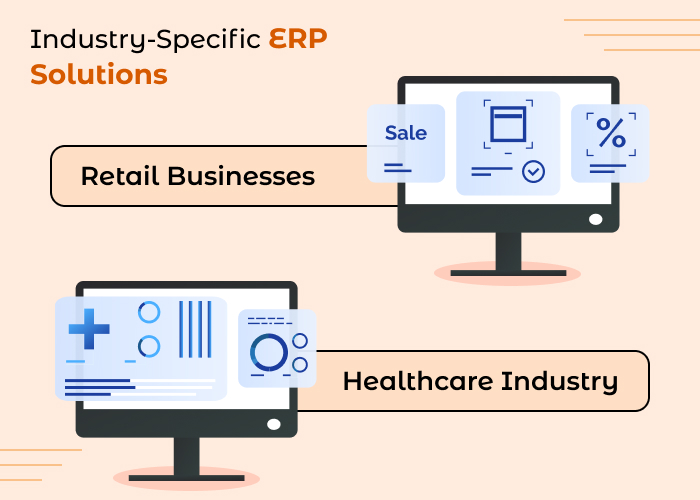
Every industry has unique challenges, and a custom ERP solution can address specific operational needs. Here are a few of the several sectors that benefit from ERP systems:

Retail

Retail businesses deal with fluctuating demands, seasonal trends, and customer expectations. An ERP system helps retailers manage inventory, automate supply chains, and enhance customer experiences. For example, an online fashion retailer struggling with overstocked slow-moving items and stock shortages on trending products can leverage AI-powered inventory tracking to optimize stock levels.

Healthcare

The healthcare industry requires stringent compliance with regulations, accurate patient data management, and seamless billing operations. An ERP system ensures all these processes work efficiently and securely. For instance, hospitals managing thousands of patient records across multiple departments can benefit from an ERP’s centralized data management system. This helps in consolidating records securely, ensuring seamless coordination between doctors, pharmacies, and billing departments, reducing errors and improving patient care.

Choosing the Right ERP Solution

When selecting an ERP system, businesses should consider key factors such as:
  • Ease of Use: A user-friendly interface ensures smooth adoption across teams
  • Scalability: The ERP should adapt to growing business needs without disrupting existing workflows.
  • Customization: Industry-specific modules and integrations improve operational efficiency.
  • Cost Efficiency: A well-balanced ERP should offer essential features without excessive costs.
  • AI & Automation: Intelligent automation and AI-driven insights optimize operations and enhance decision-making.

Several ERP systems are available, each catering to different business needs. Here’s an overview of three widely used solutions:

Jira

  • Best For: Agile project management and software development teams.
  • Key Features: Custom workflows, Kanban and Scrum boards, automation rules, and robust issue tracking.
  • Limitations: Primarily focused on project management rather than full ERP functionality.

ClickUp

  • Best For: Versatile task and project management across various industries.
  • Key Features:
  • Limitations:Lacks deep financial and operational ERP modules.

AlianHub (Emerging ERP Solution)

  • Best For: Businesses looking for a cost-effective, all-in-one ERP with AI-powered automation.
  • Key Features:
    • Free Time Tracker: Built-in time tracking without additional cost.
    • Increased Security: Can be hosted on personal servers for better data control.
    • One-Time Cost: Unlike subscription-based models, AlianHub offers a one-time purchase option.
    • Complementary Support:Comes with customer support and updates.
    • Multilingual Software: Supports multiple languages for global teams.
    • AI-Driven Features: Advanced automation and intelligent analytics to streamline operations.

Each ERP system has unique strengths, and businesses should assess their priorities—whether it’s project management, affordability, scalability, or AI-powered automation—before making a decision.

Conclusion: The Future of Business Efficiency with ERP

A custom ERP solution isn’t a luxury—it’s a necessity for businesses looking to optimize operations and boost productivity. By implementing an intelligent, AI-powered, and cost-effective ERP system, organizations can streamline workflows, reduce inefficiencies, and improve decision-making.

Investing in the right ERP system ensures seamless collaboration, real-time insights, and automation, empowering businesses to scale efficiently in an increasingly competitive market. Whether you’re a small startup or an established enterprise, an ERP system can be the key to unlocking sustainable growth and operational excellence.

Looking for the best ERP solution for your business? Start by assessing your needs and exploring ERP options that align with your goals.

The post How ERP Software Can Optimize Business Operations and Boost Productivity appeared first on Alian Software.

]]>
How AI-Driven IT Solutions Can Save Your Business Time and Money https://staging.aliansoftware.net/ai-ml/how-ai-driven-it-solutions-can-save-your-business-time-and-money/ Fri, 10 Jan 2025 12:56:42 +0000 https://aliansoftware.com/?p=48624 Artificial Intelligence (AI) is revolutionizing the way businesses operate, particularly in the realm of IT solutions. By leveraging AI-driven tools and strategies, companies can streamline processes, reduce operational costs, and improve efficiency. In this article, we’ll explore how AI-Driven IT Solutions can save your business both time and money, offering real-world examples and practical insights.

The post How AI-Driven IT Solutions Can Save Your Business Time and Money appeared first on Alian Software.

]]>

Automation of Repetitive Tasks

enterprise performance management software

AI-driven IT solutions excel at automating mundane and repetitive tasks that traditionally consume significant time and resources. From automated ticketing and issue resolution in helpdesks to routine system maintenance and updates, AI systems can handle these tasks without human intervention. This leads to:

  • Time Savings: Employees are freed from repetitive tasks, allowing them to focus on strategic projects and innovation.
  • Cost Reduction: Automation reduces the need for manual labor, decreasing staffing costs and minimizing human error-associated expenses.

Predictive Maintenance and Downtime Reduction

enterprise performance management software

Unplanned downtime can be costly and disruptive. AI algorithms can monitor system health and predict potential failures before they occur. By analyzing patterns and anomalies in system performance data, AI can::

  • Prevent Service Interruptions: Predictive maintenance reduces the risk of unexpected outages.
  • Optimize Maintenance Schedules: Instead of following a fixed schedule, AI recommends maintenance only when necessary, reducing wasted resources and downtime.

Through predictive maintenance, businesses not only save money by avoiding costly repairs but also preserve productivity by minimizing downtime.

Enhanced Cybersecurity

enterprise performance management software

Cyber threats are evolving, and AI plays a crucial role in safeguarding IT infrastructure:

  • Real-Time Threat Detection: AI can quickly identify suspicious activities and anomalies, often faster than human analysis.
  • Automated Response: Some AI systems can instantly respond to threats, mitigating potential damage and reducing response times.

By investing in AI-driven security solutions, businesses can lower the risk of breaches, avoid costly security incidents, and reduce the time spent managing and responding to security issues.

Improved Decision-Making with Data Analytics

enterprise performance management software

AI-powered analytics tools sift through vast amounts of data to provide actionable insights, helping businesses make informed decisions:

  • Data-Driven Insights: AI models can analyze customer behavior, market trends, and internal processes to identify inefficiencies and opportunities for improvement.
  • Cost Optimization:By forecasting demand, optimizing resource allocation, and identifying areas to cut costs, AI analytics drive smarter budgeting and planning.

These insights not only save time by streamlining the decision-making process but also reduce financial waste by targeting investments where they yield the most return.

IT Helpdesk and Customer Service Chatbots

enterprise performance management software

AI-powered chatbots and virtual assistants enhance customer and employee support:

  • 24/7 Availability: Chatbots provide instant, around-the-clock assistance, handling routine queries and troubleshooting without human intervention.
  • Scalability:As the business grows, AI chatbots can easily scale to handle increased inquiries without proportional increases in staffing costs.

By reducing the load on human support teams, businesses save both time and money while maintaining high service levels.

Resource Optimization and Cost Savings

enterprise performance management software

AI systems optimize IT infrastructure usage by:

  • Dynamic Resource Allocation: Cloud resources can be adjusted on the fly based on current demand, optimizing costs and performance.
  • Energy Efficiency:AI can manage power consumption in data centers, reducing energy expenses and environmental impact.

These efficiencies contribute to significant cost reductions over time, as resources are used more effectively and waste is minimized

Conclusion

AI-driven IT solutions offer tangible benefits by automating tasks, predicting and preventing issues, enhancing cybersecurity, improving decision-making, and optimizing resources. As a result, businesses can save both time and money, enabling them to focus on growth and innovation rather than routine IT management challenges.

Embracing AI is not just about adopting new technology—it’s about transforming your business processes to be more efficient, cost-effective, and competitive in a rapidly evolving market. While implementing AI can require an upfront investment, the long-term savings and advantages make it a strategic choice for forward-thinking businesses.

Interested in learning more about how AI can transform your IT operations? Stay tuned for more insights or reach out to industry experts to explore tailored AI solutions for your business

FAQs

What are AI-driven IT solutions?
AI-driven IT solutions use artificial intelligence technologies—such as machine learning, natural language processing, and automation—to optimize and manage various IT tasks. These solutions can automate repetitive processes, predict system failures, enhance security, and provide actionable insights, ultimately saving time and reducing costs.
How can AI-driven IT solutions automate processes?
AI solutions can learn from data and past interactions to perform routine tasks without human intervention. For instance, AI can automatically resolve common IT support tickets, schedule maintenance, scale resources based on demand, and manage helpdesk inquiries using chatbots. This reduces manual workload, speeds up resolutions, and minimizes errors.
How do these solutions help with predictive maintenance?
By continuously monitoring system performance and analyzing historical data, AI can identify patterns that indicate potential failures. Predictive maintenance uses these insights to schedule repairs before issues cause downtime, thereby preventing costly outages and ensuring smooth operations.
What role does AI play in cybersecurity?
AI enhances cybersecurity by detecting anomalies and potential threats in real time. It can automatically identify unusual patterns, respond to suspicious activities, and update security protocols without delay. This proactive approach reduces the risk of data breaches and minimizes the time spent on manual threat analysis.
How do AI chatbots contribute to cost savings and improved customer service?
AI chatbots are available 24/7 to handle routine questions and technical support inquiries. They reduce the burden on human support teams, enable quick resolution of common issues, and can handle multiple interactions simultaneously. This increases customer satisfaction while lowering staffing and operational costs.
What are the initial steps to implement AI in IT?
Start by identifying areas that can benefit most from automation and predictive analysis. Assess your current IT infrastructure for compatibility with AI tools, gather quality data, and partner with experienced AI professionals or vendors. Developing a pilot project, training staff, and gradually scaling up are also crucial steps for successful implementation.
Are AI solutions expensive to adopt?
While there can be upfront costs—such as acquiring new software, hardware, or consulting services—AI-driven solutions often lead to long-term savings by reducing labor costs, preventing downtime, and optimizing resource usage. Many AI platforms now offer scalable, modular solutions that can fit various budget ranges and grow with your business.
What industries benefit most from AI-driven IT solutions?
Virtually all industries can benefit from AI-driven IT solutions. Sectors like finance, healthcare, manufacturing, retail, and logistics benefit from improved efficiency, predictive maintenance, cybersecurity, and enhanced customer experiences. The adaptability of AI means that customized solutions can address specific challenges within any industry.

The post How AI-Driven IT Solutions Can Save Your Business Time and Money appeared first on Alian Software.

]]>
Top Ten Backend Frameworks https://staging.aliansoftware.net/technology/top-ten-backend-frameworks/ Sat, 16 Mar 2024 15:30:37 +0000 https://aliansoftware.com/?p=42712 Selecting the appropriate backend framework is essential in order to create scalable and reliable apps. With so many choices, it's critical to comprehend the advantages and disadvantages of each framework in order to make wise choices. We'll look at the top ten backend frameworks that are popular among developers in this post.

The post Top Ten Backend Frameworks appeared first on Alian Software.

]]>

How to choose the right Backend framework?

alternatives to docker

At the beginning of every app development process, choosing the right backend framework is important. Below are a few of the points that you can consider:

  • Understand the project requirements, scalability needs, database requirements, integration with third-party services, etc.
  • Consider how big and how active the community is for the framework. Better documentation, faster support, and a wealth of libraries, plugins, and extensions that may address common development problems and boost productivity are all benefits of a thriving community.
  • Furthermore, you must examine the scalability and performance aspects of the framework. Take into account elements like the capacity to handle requests, caching techniques, and integrated scalability features like load balancing or clustering.
  • Lastly, choose a framework that offers flexibility to adapt to changing requirements and the ability to extend its functionality as needed.

Which are the top ten backend frameworks?

The top ten backend frameworks are Ruby on Rails, Django, Laravel, CakePHP, Spring Boot, Koa, Phoenix, Express.js, ASP.NET Core, and Flask.

  • Ruby on Rails

    Due to its full-stack capabilities, this framework is widely popular. The framework’s main goal is to remove as much of the tedious work as possible from the process of developing web applications such as Real Estate. The infrastructure is provided by the framework, allowing you to concentrate on the important part—the code for your application. Despite not being a commonly used programming language, it is a well-liked backend framework since it offers libraries, automated testing, and easy assistance for developers while they write code.

  • Django

    We have taken Django as one of the top ten backend frameworks due to its advanced features and functionalities. Model-view-controller architecture is used by the open-source Django web framework, which is built in Python. Its main focus is developing sophisticated, database-driven websites. Django is the ideal choice for you if having a powerful website that can handle traffic is your top concern.

  • Laravel

    Laravel is one of the best options available if you’ve been looking for a PHP backend framework online. This open-source software is specially made for web apps. Laravel is best suited for those who wish to focus on back-end development. In addition to using algorithms to generate strong passwords that aid in their extreme security, it provides a number of security features.

  • CakePHP

    By offering a framework that can be utilized as a starting point for creating web apps, CakePHP simplifies the process of developing unique websites. It is in our top ten backend frameworks list because the code can serve as a foundation for developing a web app. It can be scaled up quite well and is suitable for tasks that are easy, beginner-level, or difficult.

  • Spring Boot

    Another open-source technology that uses JavaScript for the backend is called Spring Boot. It provides you with a strong, adaptable, and modular environment that lets you create complicated business-level applications. Spring Boot is the greatest framework because of its many scalability features.

  • Koa

    Koa greatly enhances error handling by doing away with call-backs through the use of async functions. It has no essential middleware and gives users access to a range of fast server writing approaches. It is designed with the browser in mind to make rendering and templating simple.

  • Phoenix

    Phoenix is a powerful web application platform developed in Erlang and Elixir. It uses the Erlang VM and the Elixir, which has a syntax more akin to Ruby, to create dependable, reliable applications. It is adaptable. To manage cache layers, customers won’t need to utilize any third-party applications or complicated communications systems.

  • Express.js

    Web apps and APIs are developed using Express, a Node.js backend framework. It is a backend component of the MEAN stack. Full-stack Javascript features are used in it. The front end and back end won’t require independent developers for the same reason. By using it, you’ll save a ton of money in addition to time.

  • ASP.NET Core

    You may create and operate applications across a range of platforms and situations using this framework, which is a version of the Microsoft server stack. Furthermore, it requires minimal coding making it the best choice for the top ten backend frameworks list.

  • Flask

    As a WSGI framework, Flask operates the web server in place of the user’s browser. Flask is used by many contemporary apps since it enables them to build bespoke projects that function well. It provides support for the feature extensions that might give the impression that Flask was designed with them in mind.

Conclusion

With so many alternatives available, developers need to consider the benefits and drawbacks of each framework in order to make an informed choice. From the scalability of Spring Boot to the robustness of Ruby on Rails, each one of the top ten backend frameworks offers special features and functions catered to certain project requirements. Depending on your priorities—simplicity, speed, or broad community support—there exists a backend framework that is ideal for you.

FAQs

Are there any backend frameworks that support multiple programming languages?

Yes, some backend frameworks, such as Spring Boot for Java and Koa for JavaScript, offer support for multiple programming languages or have plugins/extensions that enable interoperability with other languages. However, most frameworks are designed to work with a specific programming language.

Which backend framework is best suited for real-time applications or chat applications?

Frameworks like Express.js, Koa, and Phoenix are well-suited for building real-time applications due to their asynchronous capabilities, event-driven architecture, and support for WebSockets. These frameworks excel at handling concurrent connections and managing real-time communication.

What factors should I consider when migrating my existing project to a new backend framework?

When migrating an existing project to a new backend framework, consider factors such as compatibility with your current codebase, database migration strategies, learning curve for developers, and potential impact on performance and scalability. It’s essential to thoroughly test the new framework and plan for any necessary adjustments or refactoring.

Are there any backend frameworks specifically designed for microservices architecture?

Yes, frameworks like Spring Boot and Express.js are commonly used for building microservices architectures due to their lightweight and modular nature. These frameworks provide features such as dependency injection, RESTful routing, and built-in support for Docker and Kubernetes, making them ideal choices for microservices-based projects.

Can I switch backend frameworks mid-project?

While it’s technically possible to switch backend frameworks mid-project, it’s generally not recommended due to the potential for compatibility issues, code refactoring, and disruptions to development timelines. It’s best to carefully evaluate and choose the right framework from the outset.

The post Top Ten Backend Frameworks appeared first on Alian Software.

]]>
How much it costs to hire remote Node js developers https://staging.aliansoftware.net/website/how-much-it-costs-to-hire-remote-node-js-developers/ https://staging.aliansoftware.net/website/how-much-it-costs-to-hire-remote-node-js-developers/#respond Wed, 23 Nov 2022 13:39:34 +0000 https://aliansoftware.com/?p=20666 We all know that Node js is a popular framework. We use it majority for the back-end development of web applications. Companies can launch outstanding apps thanks to its speed and performance. But it is difficult to get the proper expertise for the work at a fair price. The powerful back-end of the project depends on the expertise of a node js developer.

You should expect to pay somewhere between $31,680 and $150,000 a year for a remote Node js developer. Additionally, the hourly cost for employing remote Node js developers varies from $22 to $80. This blog discusses the importance of hiring skilled node js developers and its costs. It will help you understand the reason behind the difference we find in the hourly wage of developers.

The post How much it costs to hire remote Node js developers appeared first on Alian Software.

]]>

Factors that affect the hourly cost of node js developers

A project to design bespoke software involves many different aspects. Every work has its own specific needs and features. Developing a chatbot vs creating a money integration API, for example, will be very different in size and scope. For the money API, you’ll need to hire developers with the necessary experience, although a software developer would be sufficient for the chatbot. A project to design bespoke software involves many different aspects. Every work has its own specific needs and features. Developing a chatbot vs creating a money integration API, for example, will be very different in size and scope. For the money API, you’ll need to hire developers with the necessary experience, although a software developer would be sufficient for the chatbot.

As a result, various needs of the project impacts the expense of employing engineers. Let’s quickly review some factors that may affect the cost of recruiting node js developers.

The project’s size

The project's size

Node js is a good choice for creating large applications, but it also functions well for smaller apps. A great example of such an app is a real-time chatting programme or a chatbot. You can get away with hiring just one node js developer if you want to design a simple application.

Illustrations of common medium-scale Node js applications include IoT apps and complicated single-page applications. Such applications can benefit from the framework’s capacity to manage several continuous queries and asynchronous processing. However, the backend of such apps will have more lines of code, increasing node js developer expenses.

Node js enables flexibility and performance due to its built-in characteristics. Node js powers the backend of many large, international companies, including Netflix, LinkedIn, and others. Corporate projects, however, require teams of knowledgeable node js developers to complete the task. As a result of the increased demand for developers and their competence, developer expenses increase.

Difficulty of the project

Difficulty of the project

It makes sense that if you hire remote node js developer, expenses would rise as the project’s difficulty arose. Yet, if the project’s needs are small to the most fundamental functionality and a straightforward setup, even less skilled engineers may handle the job.

In contrast, one will need the assistance of skilled developers if the product has specialized features and sophisticated functions. Let’s take the security of an app as an example. Any business application must have this essential component. Therefore, you won’t simply need to hire remote Node js developer; you also need somebody with expertise in security.

Additionally, bear in mind that complicated functions frequently take longer to implement. Hence, regardless of the payment structure, businesses will need to make up for the extra work hours put in by developers.

Skills of Node js developer

Skills of Node js developer

Anyone with four to five years of Node js expertise might be regarded as an experienced developer, taking into consideration the time it took for it to become well-known. The selection of node js developers is quite effective using just this statistic. Even though Node js is mainly utilized for the backend, a frontend expert is really a welcome asset. These node js developers can stay current with how the program will seem from the outside and comprehend layout ideas better.

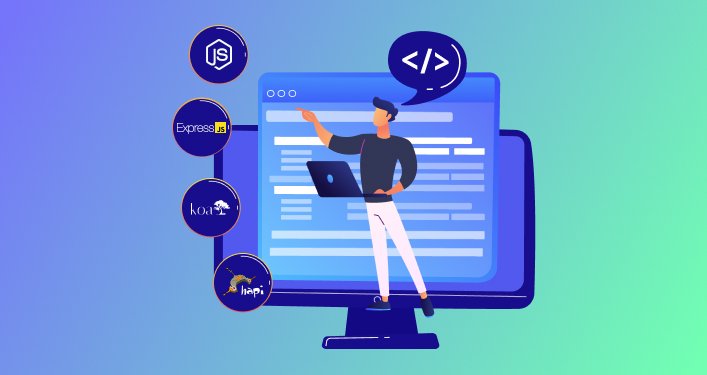
Knowledgeable Node js developers are able to use APIs to integrate systems for a simpler construction. They are also able to manage several datasets and potentially combine a number of them into one. In order to make the most of Node js you must use frameworks. The most in-demand skills are frequently developers with knowledge of several Node js frameworks, such as Total, Hapi, Koa, Hapi, Express, etc.

In addition to these specialized talents, the cost of employing Node js developers will depend on factors such as troubleshooting, the capacity to build clean code, organizational skills, etc.

Average cost of hiring Node js developers

Experience affects the rate. Beginner node js developers are capable of handling the majority of development tasks. They will likely configure a web server or connect a frontend functionality to a backend API, for example. Their hourly wage is approx from $15 to $25.

The node js developers with a lot of hands-on work experience and much more advanced programming abilities bill their clients between $25 and $50 per hour. They are knowledgeable about the JavaScript environment, therefore you may depend on them for somewhat challenging programming tasks. Expert node js developers are able to create NPM packages from start and have expertise dealing with a variety of backend frameworks. The hourly pay rate is between $50 and $80 each hour.

Apart from skills, location is another factor that affects the hourly wage. In USA the average salary is $112,891 whereas it’s low in India at $31,680. The hourly wage of if you hire remote node js developers from India ranges from $15 to $50.

Conclusion

Even if employing remote node js developers is the best option, managing all these factors can be exhausting. Thus, hiring an agency will be helpful in managing projects effectively and financially. The top agencies from all around the world may be found via Clutch and LinkedIn. The hourly wage for such agencies ranges from $25 to $300.

FAQs

Are node JS developers in demand?
There is a demand for real-time faster and event-driven servers. Thus, node js developers are in demand.
How many developers use node js?
38% of developers utilize Node JS libraries. Node JS has a big user base. It also has a massive following.
Is it worth learning node js in 2022?
Node js development has grown in popularity over the previous four years and is expected to remain competitive in 2022. Thus, learning node js would be beneficial.
Is NASA using node JS?
The simplicity of establishing data transfer apps using JavaScript, as well as the coding knowledge within the company, reduces costs and development time. As a result, NASA adopts node js.
Is Python better or node js?
Python is more suited for back-end apps and machine learning, while Node is better suited for web-based applications and websites.

The post How much it costs to hire remote Node js developers appeared first on Alian Software.

]]>
https://staging.aliansoftware.net/website/how-much-it-costs-to-hire-remote-node-js-developers/feed/ 0
A Complete Guide to Improve Page Speed https://staging.aliansoftware.net/website/website-page-speed-increase/ https://staging.aliansoftware.net/website/website-page-speed-increase/#respond Mon, 28 Dec 2020 03:40:02 +0000 https://aliansoftware.com/?p=16824 Generally, at the time of website development, developers mainly focus on achieving functionalities. But with the functionality, there are other aspects that need to be considered. Out of those aspects, one important aspect is the speed of the final website.

Even though your website has unique features implemented with it, if the website’s load time is high, then it affects your business in many different ways like drop off in traffic, loss of money, negative impact on SEO, etc. So, throughout this article, we will discuss the different ways through which it becomes possible to increase page speed. Let’s begin.

The post A Complete Guide to Improve Page Speed appeared first on Alian Software.

]]>

Reduce Unnecessary and Avoidable API Calls to Server

  • Implement input data validation on both ends i.e on the front-end and backend. Due to this, you can achieve your goal to call an API in a single request. If validation is not implemented on the front-end side, then in the first request, the server will send a data validation error in the response and you have to again send the request with the correct data.
  • Wherever possible store frequently required data on the frontend side. On the website, sometimes it is required to show the same information on multiple pages. So, instead of making an API call on each and every page, use the concepts like Local storage, Session storage, cookies, etc to keep data saved on the frontend side. If you are building a frontend using the latest frontend frameworks, then use state management facilities provided by the used framework. For example, if your building a frontend in vue.js then uses vuex that is the state management pattern + library provided by vue.js.
  • Make the frontend design in a way that requires less amount of data from the server in a single API call. For example, you have hundreds of products in your database, then instead of showing all the products on the first page, use the pagination or lazy loading of data in your design. With that Make the backend API in a way that it sends paginated data instead of sending all the data in a single call.
  • Try to reduce the 3rd party API calls from the website to increase website page speed. If it is not possible to remove 3rd party APIs from the website then analyze the updated pattern of the API’s response data. If response data is not updating frequently then store them in your database and write a cron job that runs once a day to get and update data from the 3rd party API.

Use Minified Version of JS, CSS

Minified versions of the CSS or JS comparatively take fewer bytes to download than the original one. So, the browser will download it quickly. There are many tools available like uglify.js, CSS-minify which convert your regular JS and CSS into its minified version.  Nowadays because of Node, it becomes easy to convert regular code and all dependencies into a single bundle file using tools like Webpack and Browserify. Thus, it will help in optimising website page speed.

Page speed improving

Reduce Image Size

  • Website pages which are having many images on them take too much time to load compared to pages which are having just text on them. So, in that case, either we have to resize or compress the images in a way that the quality of the image should not be compromised.
  • Reducing the size will reduce image quality, but a 10% to 20% reduction in image quality won’t change its appearance on the website. Sometimes adopting new image formats, such as WebP and JPeg XR, can also help reduce image weight by 20% to 50% without sacrificing quality.

Cache Page Data

The caching website’s page data will help to load the website content in a faster way. There are two types of caching:
Browser cache:
    • Nowadays, mostly all the latest browsers provide the facility to cache page data. When you visit any new website for the first time, the browser will cache all the required JS, CSS, or image files in its cache. So, next time when you visit the same website, the browser will load the data from the cache instead of sending requests for each resource to the server. Browsers store the data in a cache for a specific amount of time. After that browser will clear the cache and download the latest content of the website. You can check the cached data in the browser’s console.

Server cache:

    • Just like the browser, the server can also cache the data. But instead of storing it on the same machine, it stores the data nearer to the server’s location.
      Once a server cache the website data, next all the requests will get a response from the cache without reaching out to the server for each request. Developers can set the cache expiration time in the request header. Once the set expiration time is over, all the cache data will get cleared and on the next request of the website, the server will again store the latest data in a cache.

Reduce The Use of 3rd Party Plugins/Packages

In the frontend or backend development, 3rd party plugins play an important role to implement different features with less amount of code and time. But with the advantages, it also has one drawback and that is, it increases your final project size. So, if not necessary then try to avoid the use of 3rd party plugins. For example, in Node.JS to allow CORS requests 8 to 10 lines of code is required. So, in this case, it is possible to avoid the use of external packages that are designed to allow CORS requests and developers can manually add this functionality to the website. This is also a step to optimize website page speed.

Choose Hosting Plan Wisely

Right now to host websites, many options are available. For example shared hosting, dedicated hosting, cloud hosting, etc. If you have enough budget and requirement to load a website quickly then choose dedicated hosting or cloud hosting. In dedicated hosting, you have access to a separate server only for your website. While in the case of shared hosting many websites are hosted on a single server. So, if there is more traffic on any of the hosted websites on the same server, the performance of your website may reduce. Cloud hosting is a trend nowadays because of its pay as you go characteristic. In cloud hosting also you will get a separate server for your website.
Page speed

Database Optimization

For any website, database operations are always heavy compared to any other operations. Thus, proper database design/structure makes a significant difference on website performance. Database optimization reduces the database system response time and requirement of complex queries to get required data. There are various ways available for database optimization like remove unused tables, use indexes for your database, validate your database design against DBMS normalization techniques like 1NF, 2NF, 3NF, BCNF, etc.

Conclusion

Above mentioned all the tips are common for each type of website. It is not necessary that every step is well suited for your website. But you can keep all the points in your mind at the time of development. So, that you don’t have to spend more time to increase page speed once the development is about to complete. There are also many other ways that can increase your page speed. So, if you are facing slow page speed issues then analyze and find the root cause behind it by debugging your site and applying different solutions for the issues. With that, you can also use different tools like GTmetrix to analyze the page’s speed performance.

At Alian Software, our team of highly experienced developers will help you out with your website page speed. You can simply call us or Contact us at sales@aliansoftware.net.

The post A Complete Guide to Improve Page Speed appeared first on Alian Software.

]]>
https://staging.aliansoftware.net/website/website-page-speed-increase/feed/ 0